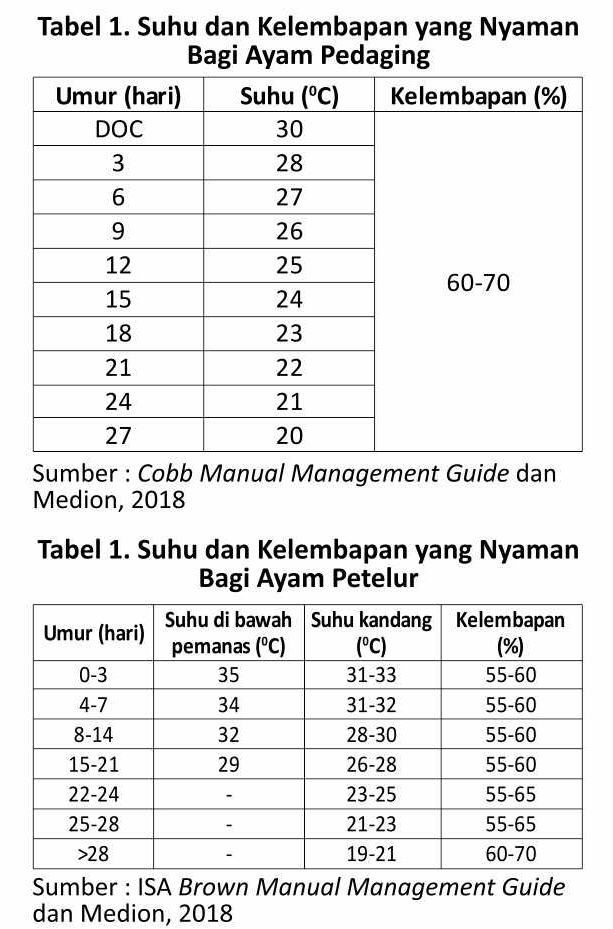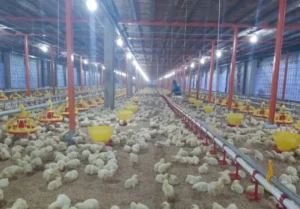
The rainy season in 2019 is expected to enter late October to mid-November (BMKG, 2019). The highest levels of precipitation usually occur at the height of the rainy season and are expected from January to February. The current weather tends to be difficult to predict and changeable. This condition inevitably also has an impact on the decline in chicken performance. On the other hand, the genetics of modern broilers today have a very high sensitivity to ambient temperature and new chicks can regulate their body temperature optimally at the age of 2 weeks. Therefore, when the chicks are still 0-14 days old, the role brooder (heating) and optimal management greatly affect in an effort to keep the temperature of the cage remains in the comfort zone.
Various Problems During The Rainy Season
The rainy season or wet season is a season characterized by increased rainfall in an area than usual in a certain period of time on a regular basis. The condition of the farm during the rainy season is certainly different from the dry season. Some problems that arise and impact on the future brooding period, among others:
- Low temperature
During the rainy season, the ambient temperature is relatively lower (cold air). If time brooding period, during the rainy season, it takes almost all day to warm up and brooding period, will last longer (>14 days). The situation is very different during the dry season. When dry, during the day (DOC age 3 days) the heater can be turned off because the ambient temperature has met the required temperature DOC. The implementation of an all-day heating system (the heater is on day and night) will be preferable. If extra heating is not done during the day, the DOC does not get the ideal temperature for its growth and will be cold. Further impact, DOC growth will be uneven and many are small so that the performance becomes ugly. - Strong winds
The beginning of the rainy season or the change from the dry season to the rainy season (transition season) will usually be followed by the appearance of strong winds from an erratic direction. High wind speeds can this can expose chickens to extreme cold stress, damage the chicken coop, even the chicken coop can collapse. Such damage will result in large losses for farmers and automatically disrupt the smooth running of the livestock business. - Air humidity becomes high
High air humidity (more than 85%) can have an impact on the respiratory tract of chickens which will be disrupted as a result of the high water content in the air. In addition, a humid environment is an ideal condition for the growth of bacteria, viruses, parasites and fungi, so chickens become susceptible to disease attacks. High air humidity can also cause the condition of the husk in the postal cage to quickly become damp, wet and lumpy so that the ammonia gas content in the cage becomes high. - Contaminated water sources
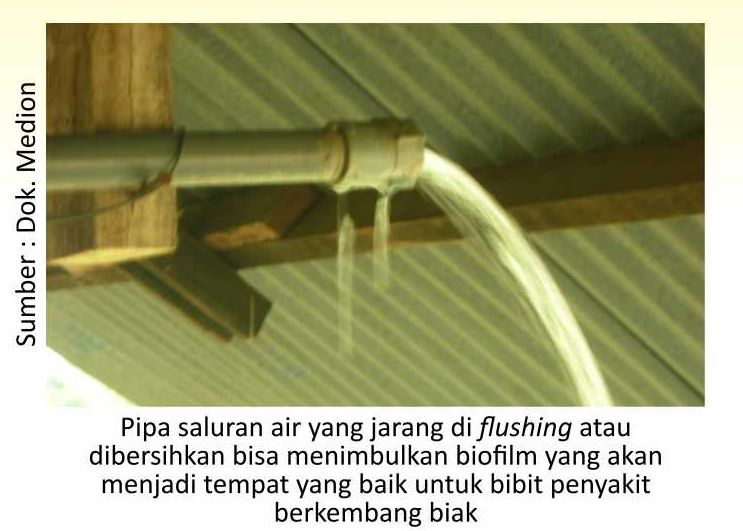
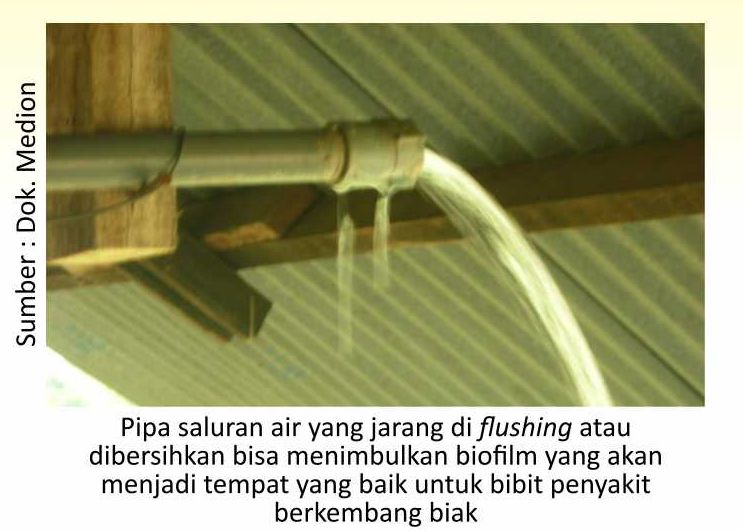
Increased rainfall will certainly increase the volume of groundwater. Although the number is increasing, this often triggers new problems, namely a decrease in water quality. Quality degradation generally occurs physically, chemically (heavy metal content, high pH levels, and biology (number of pathogenic microbes). Physically the water becomes cloudy, smelly, and mixed with organic particles or mud material. - The quality and quantity of feed decreases
The high humidity in the rainy season causes the storage of feed in the warehouse and a decrease in feed quality both in quality (decrease in nutrient levels) and quantity (clumping and damage to feed), and feed is easily contaminated with fungi so that the risk of being contaminated with mycotoxins (fungal toxins). - Other activity disorders
Many other chicken farming activities are disrupted during the rainy season. The transport system for the delivery of feed or DOC becomes hampered. In addition, the process of catching chickens during harvesting or moving cages is also disrupted. Cage building maintenance activities become higher, especially to overcome leaking roofs or improve drainage to keep it running smoothly. - Need additional lighting
During the rainy season, sunlight is relatively reduced, even at certain times it can be cloudy or dark throughout the day. If this situation occurs, the farmer must add lighting so that eating and drinking activities, as well as chicken egg production are not disturbed. - Spread of disease
Since the beginning of the rainy season (transition season), diseases that attack chickens began to appear as a trigger for stress in chickens and spur the development of disease in chickens. Seedling disease in the rainy season is slightly different than the dry season. Airborne transmission that often appears during the dry season, is somewhat reduced in the rainy season. But transmission through drinking water is on the rise. In the rainy season there are also many mosquito larvae in puddles around the cage or cockroaches wandering on the sidelines of the cage from maghrib to Dawn which acts as a vector of disease.
Meeting the needs of chicks as a critical point of childhood Brooding
In order for the chicks to pass the critical period in the rainy season well until they reach the optimal productivity target, it is necessary to consider several things as follows:
- Management chick in the optimal
Before the start of the period brooding period,, of course, it is necessary to prepare a comfortable and clean cage before the implementation chick in. Cage cleaning should be done thoroughly from washing the cage, equipment, removing litter and feces, to liming and disinfection. The rest period of the cage cannot be shortened and should be applied at least 2 weeks after the cage is clean. - Adequate nutrition and drinking water needs
Rations and drinking water should be given as soon as the chicks arrive because it is beneficial in accelerating the absorption of the remaining yolk which is a temporary source of nutrition and a source of immunity (maternal antibodies) of chicks. In addition, the provision of rations at this time will be able to stimulate the development of the digestive organs through increased digestive capacity and intestinal absorption. To replace the energy lost during the trip, give 2-5% sugar water and Gingertol. Prepare immediately before chicks are stocked in chick guard. Along with giving drinking water, give quality rations little by little but with frequent frequency. As well as ration, drinking water is also very concerned in the future brooding period,. Availability of drinking water during the period brooding period, until then, it must be fulfilled both in terms of quantity and quality. - Temperature and humidity awake
In order for the chicks to grow well, the critical period largely depends on the provision of a comfortable temperature from an artificial heater. Temperature control brooding period, it should be done periodically and as often as possible. The comfort of the chicks can also be described by activity and dispersal in the cage. The ideal temperature will make the chicks spread evenly and move normally. - Clean air needs met
Good air circulation through ventilation can reduce the smell of ammonia and dust in the cage, then put clean air into the cage. If the oxygen in the cage is less even there is a lot of harmful gas content then the chicks will be disturbed. Provide a ventilation gap in the upper cage wall 20-30 cm wide. Sufficient clean air can also be created by adjusting the density of the cage. Perform widening chick guard gradually as the age and weight of the chicken increases. - Optimize lighting
Optimal lighting will encourage chicks to always consume rations and drinking water, and help in the secretion of the hormone thyroxine to speed up the metabolism of the Chick's body. Lighting needs in the brooding period is a maximum of 20-24 hours / day with a light intensity of 20 lux. After that, it can be gradually reduced by 2 hours every week as the age of the chicken increases. - Good health management
To help improve the functioning of the immune system chicks can be given immunostimulants such as Imustim three days before and after vaccination. Imustim can be mixed directly with drugs or vitamins, but should be given separately with the vaccine to maximize the effectiveness of the vaccine. Do the right vaccination program to bully the active immune system when maternal antibodies are not protective as you get older. Follow the steps (cleaning program) to eradicate bacterial disease agents that have infected the Chick's body by giving Amoxitin, Therapy, or Neo Meditril compliance with the dosage and rules of use.