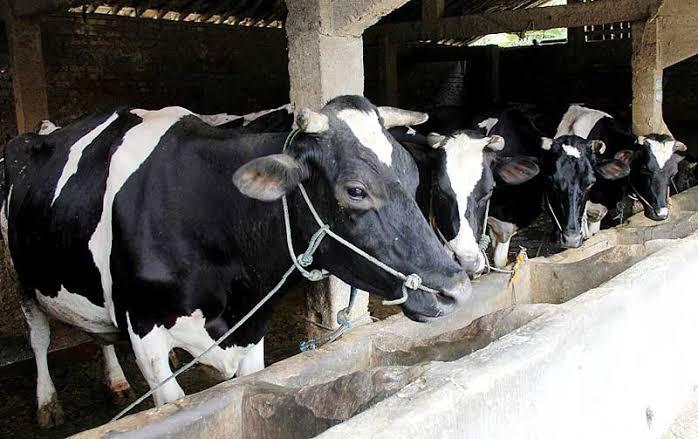
Dairy cattle is one of the livestock commodities that still have ample development opportunities in Indonesia. As we all know milk as a perfect human drink, because it contains many nutrients.
The 1st of June is celebrated as World Milk Day (World Milk Day), with the aim of disseminating information about the benefits of milk by inviting people to consume milk that is beneficial to the body and increasing the dairy industry that is profitable for dairy farmers. Domestic fresh milk production is estimated to have a share of about 20 percent of the National Milk demand of 909,638 tons in 2018 (BPS, 2018). Low milk productivity will have an impact on the income level of farmers.

One aspect that must be considered in the management of dairy cattle rearing, is the health of livestock. Healthy livestock will have optimal productivity and produce quality milk. In the management of dairy farming in some developing countries, mastitis is a major problem because it can cause a decrease in milk production in large quantities.
Occurrence Of Mastitis
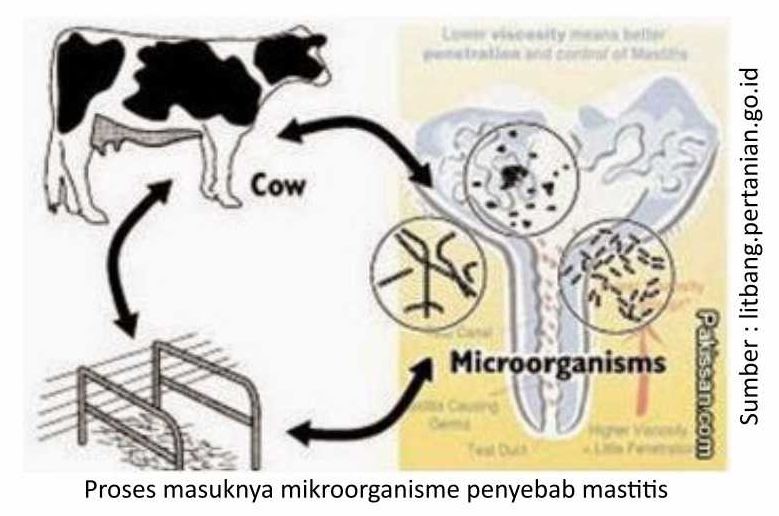
Mastitis is an inflammatory disease of the inner udder caused by pathogenic microorganisms or bacteria that cause mastitis inside the mammary gland. The transmission of this microorganism enters through the nipple and then multiplies inside the mammary gland.
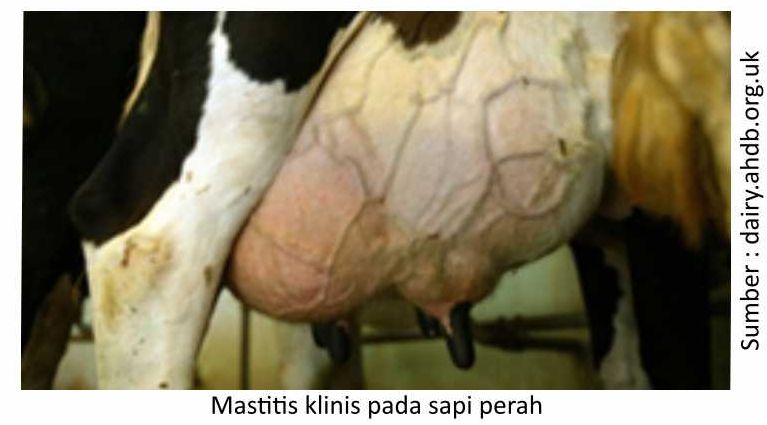
Based on the clinical symptoms, mastitis disease is divided into clinical and subclinical mastitis. Clinical Mastitis when there are physical changes in milk such as broken milk, mixed with pus, or swollen udder, bleeding, when held hot and show pain response. Subclinical Mastitis is when there is no physical change in milk and udder but if a mastitis test is carried out there will be an increase in the number of white blood cells in milk.
Subclinical Mastitis is a frequent case in the field on dairy farms, reaching 95-98% of the number of production cows, while clinical mastitis, 2-5% (Jabar R & D Agriculture, 2017). Cases of mastitis often start from subclinical mastitis that occurs during lactation. Subclinical Mastitis can be detected only by conducting laboratory tests, for example, with California Mastitis Test.
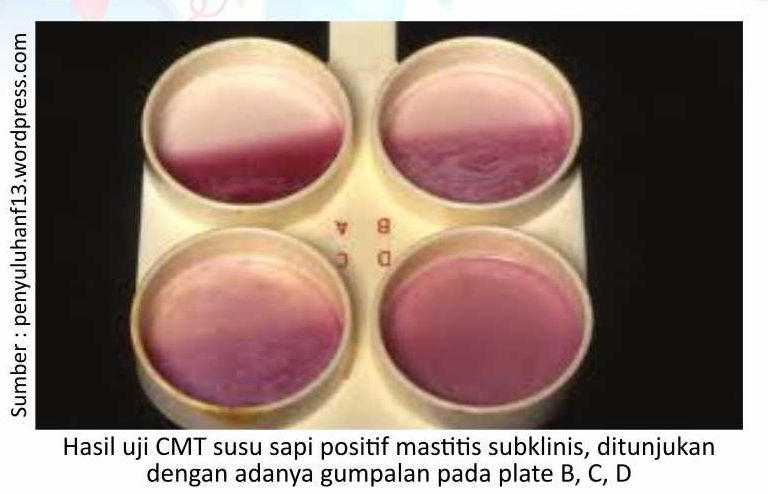
Disadvantages Of Mastitis
Subclinical and clinical Mastitis can cause economic losses such as a decrease in milk production per quarter per day which can reach 9-45. 5%, a decrease in milk quality resulting in rejection of milk reaching 30-40%, a decrease in the quality of dairy products such as decreased durability of pasteurized milk, changes in acid production in fermented milk products, butter products rancid, and a change in taste in some processed products. In addition, mastitis can also increase the cost of treatment and treatment, as a source of infection of other cows, as well as the rejection of livestock becomes faster.
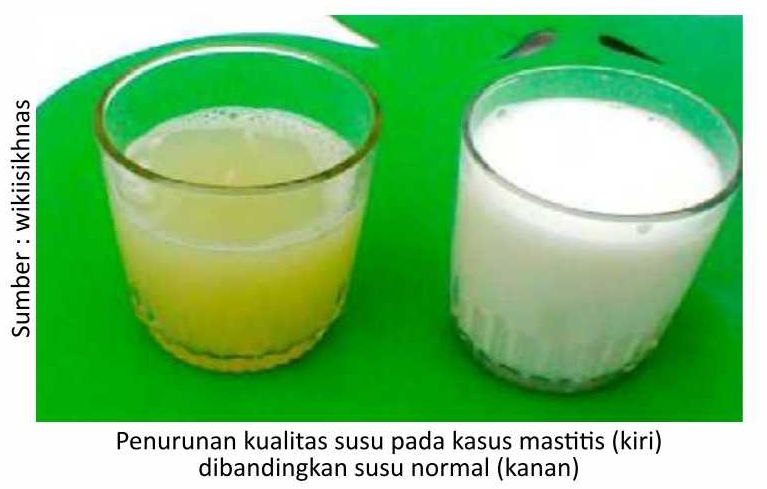
Prevention and treatment
Preventive measures for mastitis disease are necessary, for example:
- Maintain good Cage cleanliness & sanitation. Environmental hygiene is very influential on the incidence of mastitis. With good environmental hygiene, the risk of mastitis will be reduced.
- Good milking management as mastitis is common from one cow to another and from infected quartile to normal quartile through milking hands, cleaning cloths and milking machines. For example, by cleaning the floor of the cage before milking, cleaning the hind legs, udder & nipple area and dipping the nipple before milking (example with Neo Antisep), hand washing milkers with soap, milking equipment in a clean & dry state, and after milking cows are fed to avoid cows sitting and germs entering the nipples that are still open shortly after milking.
- CMT test periodically (at least 1x in 1 lactation cycle).
- Administration of natural products that can prevent mastitis such as Mastigrin. Mastigrin it is an herbal/ natural product to prevent mastitis, and has more benefits to increase milk production. With advantages such as no withdrawal time/ downtime, no drug residue, and safe to use during the lactation period.
Treatment against mastitis can be done with antibiotics according to the infecting bacteria. For optimal treatment, antibiotic sensitivity to bacteria can also be tested before treatment. Treatment with effective antibiotics according to the cause, for Gram negative & positive bacteria such as Gentamin, Medoxy-L, for also Mycoplasma as a group of people Neo Meditrile-I, Tysinol.
By taking into account the health aspects of the maintenance of dairy cows, it is expected that the livestock will be healthy and have optimal productivity so that the milk produced is also of good quality. Because milk and dairy products will be consumed by humans. Milk as a source of animal protein is very good for human health.