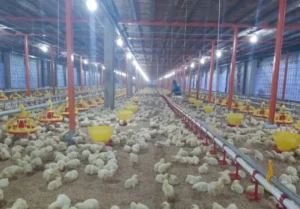

Who doesn't want to get their hands dirty (Avian Influenza) or commonly known as bird flu. This poultry disease is expected to continue to threaten poultry farms in 2017. For this reason, more thorough preparation is needed to prevent this disease from attacking.
What is the current situation of AI in the field?
In accordance with the results of poultry disease projections in 2016 that the pattern of development of poultry diseases in the field is very fast, including AI diseases. AI disease is still one of the prima donna of viral diseases in broilers and layers. Since the discovery of the bird flu virus clade new 2.3.2 at the end of 2012, now the disease also threatens duck farms with a high mortality rate of 29,611 Ducks/Ducks (Ditjen PKH, 2016).
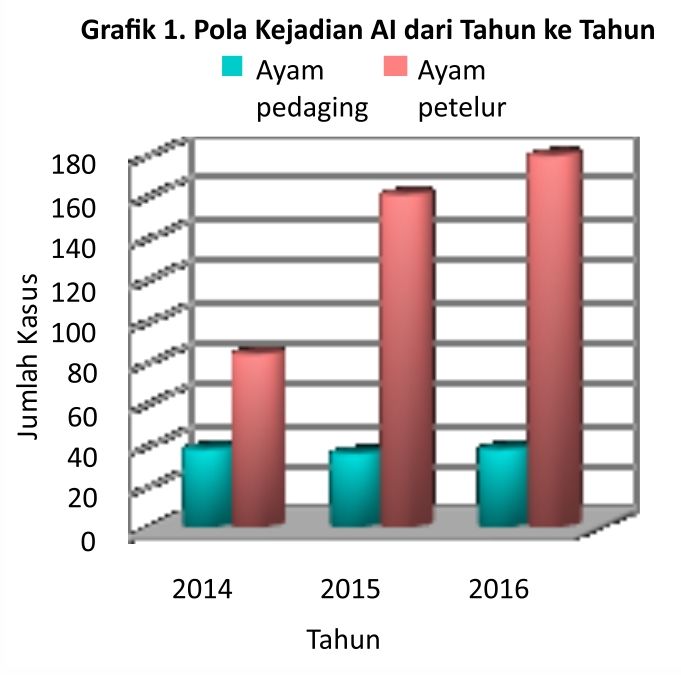
Based on team reports Technical Education and Consultation Medion (2016) seen from Graph 1, AI cases until November 2016 increased compared to 1 year earlier. From the disease data summarized from January to November 2016, AI cases tend to increase and show a seasonal pattern, which tends to be high at the beginning of the year due to the peak of the rainy season in 2016 (graph 3). So that it can be predicted for the beginning of 2017, farmers need to be aware of AI diseases that could strike back. In addition to AI, ND disease also increased at the end of 2016.
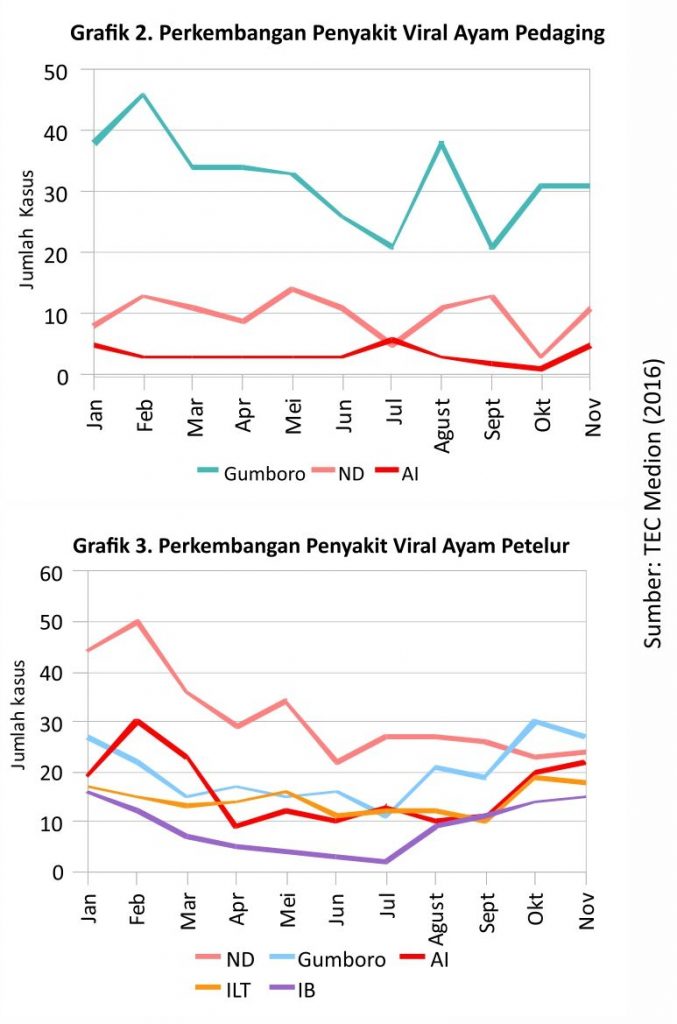
We know that the AI virus has relatively unstable characteristics in the environment, especially if exposed to hot ambient temperatures so that when entering the dry season in mid-year cases of AI disease decrease.
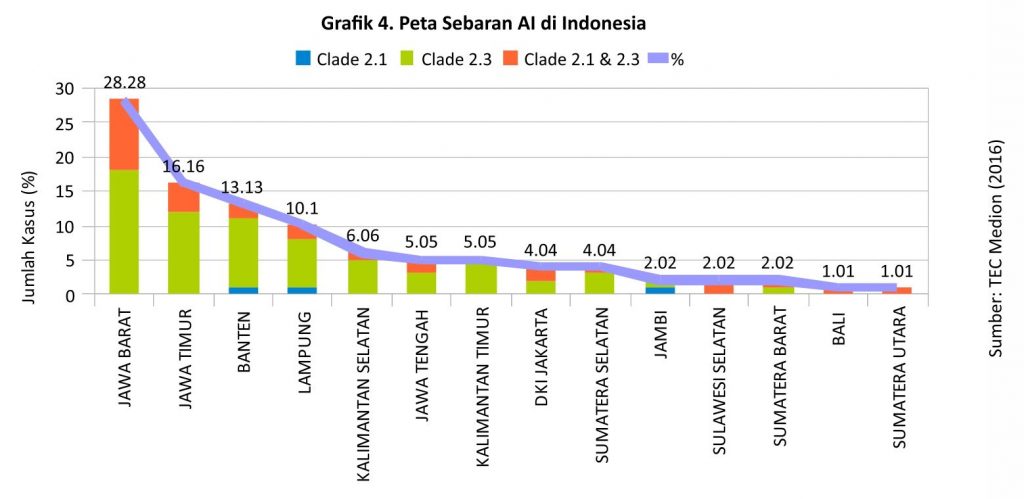
Since September 2012 in Indonesia appeared virus AI clade 2.3.2. This Clade 2.3.2 is more isolated from the case High Pathogenic Avian Influenza (HPAI), where both are found in all types of chickens (broilers, layers, breeders, males, and free-range chickens) and ducks. The circulation of these two types of viruses cannot be separated geographically because both can be found in one area. But in 2016, in one case, an AI attack clade 2.3.2 more dominant found (Chart 4).
Causes of the spread of AI
According to information from the Meteorology, Climatology and Geophysics agency (BMKG), from November 2016 until the next few months, extreme and erratic weather changes are expected, these conditions are feared to have an impact on the declining condition of poultry bodies and increasing cases of various infectious diseases in poultry, including AI disease. Similarly, the Directorate General of animal health of the Ministry of Agriculture (2016) said that the outbreak of AI attacks in Indonesia was still caused by several factors, including:
- The spread of disease seeds is supported by erratic extreme weather changes. As a result, chickens experience stress and their endurance decreases, which provokes the appearance of various poultry diseases, including AI.
- There is still a lack of awareness of breeders of purebred chickens, free-range chickens and small-scale commercial ducks in implementing strict biosecurity measures, appropriate vaccination programs, and monitor antibody titer routinely.
- The speed of the spread of the AI virus in the surrounding environment is due to the poultry marketing link that is the collection point for various types of poultry, both healthy and sick, supplied through poultry traders. In addition, there is a lack of awareness in the handling of poultry carcasses.
Clinical symptoms and pathological changes in the anatomy of AI
AI attacks can cause clinical symptoms and anatomical pathological changes that vary depending on the level of AI malignancy that attacks, the immune status of the bird, the age of the bird, and the environment. Clinical symptoms of AI are still relatively difficult to distinguish from cases of ND. In the current case of the disease attack process progresses rapidly accompanied by a drastic decline in egg production and high mortality,. In addition, more clinical symptoms such as chicken eyes appear grayish, twisted neck (torticollis), bleeding tissue under the skin followed by redness such as bruises, especially legs, Combs and wattles where these changes are similar to AI in early 2004.
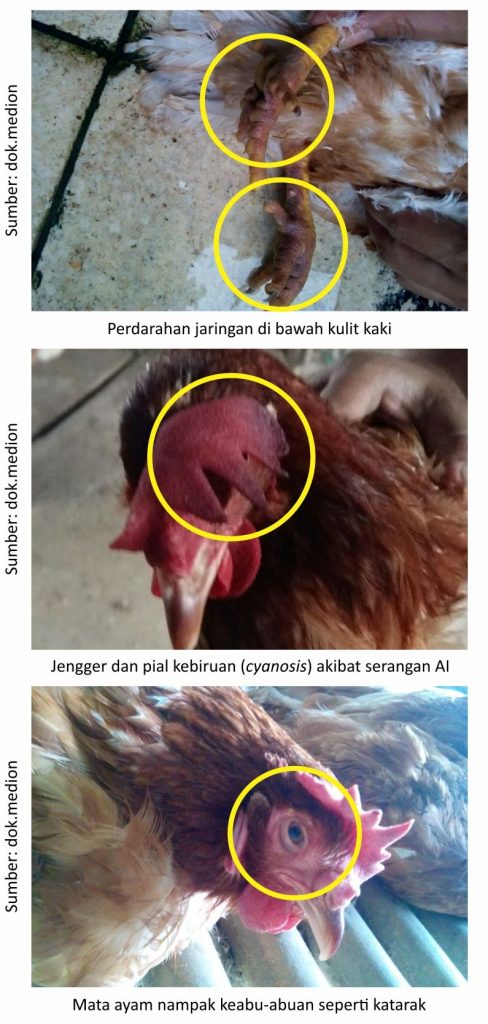
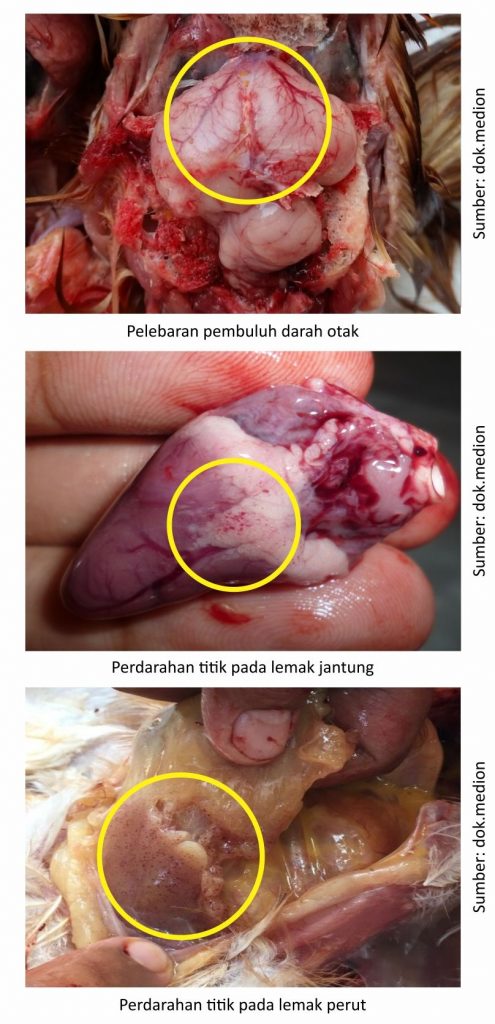
Changes in the respiratory tract, namely the presence of inflammation laryng and trachea but not very specific. While the most severe changes such as dilation of the blood vessels of the brain, point bleeding in the heart fat, abdominal fat, as well as swelling of the kidneys that appear more dominant appear.
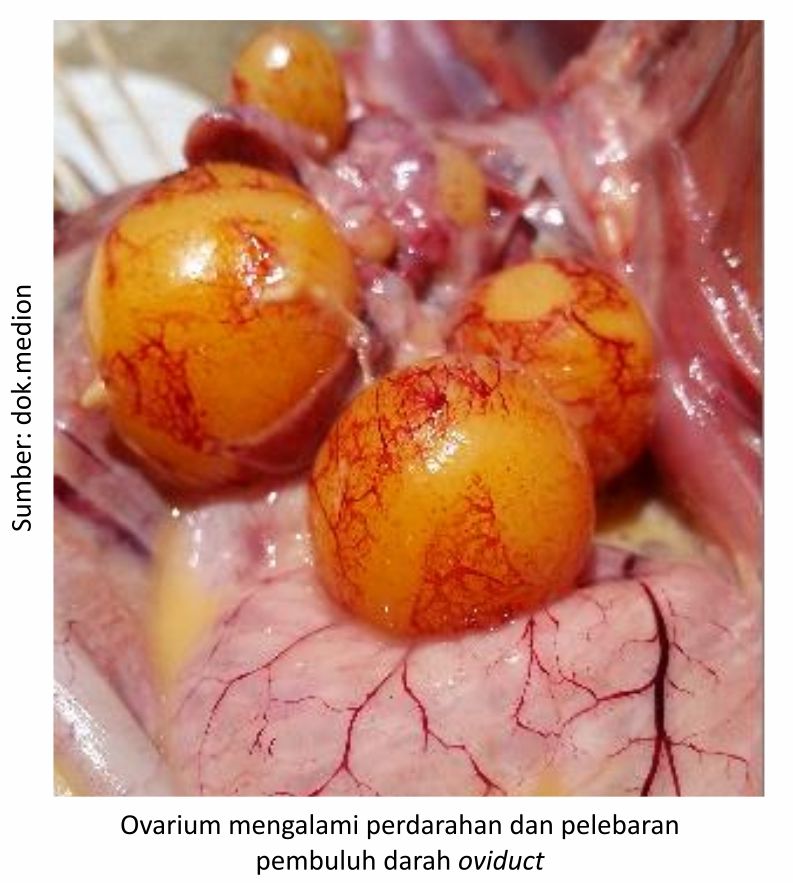
In laying hens the production period also found changes in the reproductive organs that can affect the decrease in egg production such as dilation of blood vessels in oviduct and ovaries. In addition, changes that appear similar to IB diseases such as oviduct are found in clear fluid deposits in the oviduct (cystic oviduct).
AI control efforts
In accordance with the results of field data observations, the beginning of the year is always predicted to enter the peak of the rainy season. The key to successful AI and ND Disease Control is to increase immunity through vaccination, strict biosecurity implementation, and routine antibody titer monitoring.
1. Proper vaccination procedure
Vaccination is one of the spearheads in controlling AI. To support the effectiveness of vaccination, pay attention to the quality of the vaccine, the accuracy of determining the vaccination schedule, appropriate vaccination techniques and applications, and the condition of the poultry when vaccinated.
- The right vaccine
The use of vaccines that are homologous to the field virus is highly recommended because it will provide optimal protection. Choose a vaccine that suits the case of the disease that strikes. To prevent ND and AI attacks can be given Medivac ND-AI Emulsion. To overcome AI attacks can be given AI vaccines such as Medivac AI.
- Exact route and technique of vaccine administration. The next step is to prepare the syringe and increase the temperature of the vaccine gradually before being injected into poultry or better known as thawing, handling poultry, how to inject, and dose of vaccine administration.
- Proper vaccination schedule
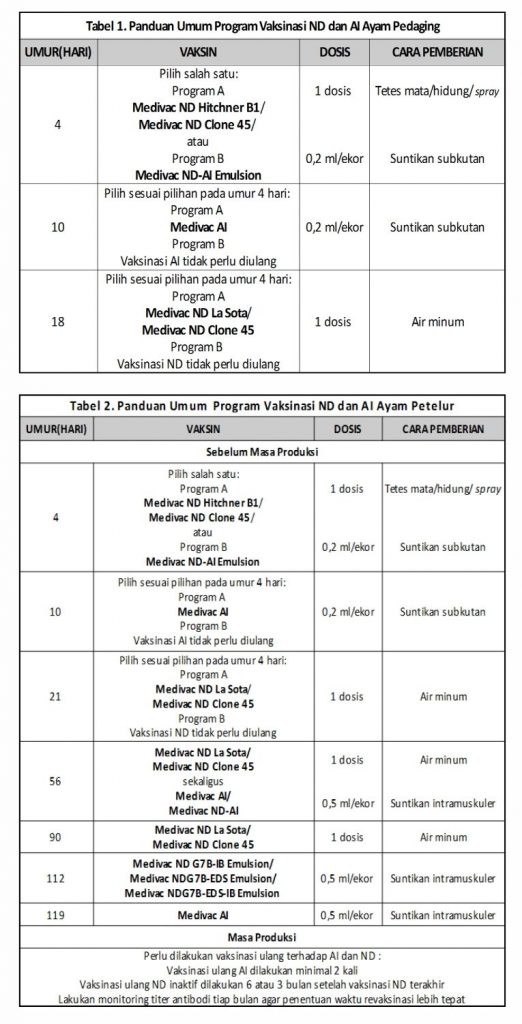
AI vaccination programs are structured based on high or low challenge AI viruses in the field and baseline titer in each farm. Based on field data, AI commonly infects broilers > 3 weeks old. So, the implementation of AI vaccination of broilers is enough to be carried out 1 time, namely at the age of 4 days using the ND-AI combination vaccine, which is carried out simultaneously with the active nd vaccination, or at the age of 10 days using a single AI vaccine.
Standard compliant Food and Agriculture Organization (FAO), in laying hens AI vaccination is carried out at least 3 times before entering the egg-laying period and at least 2 times after passing the peak of production. The first AI vaccination as in broilers or 2 weeks of age. The second vaccination can be given at the age of 5-6 weeks later after the first vaccination. Then the third vaccination can be given 2-3 weeks before the production period to produce protective antibodies until the peak of production. As a general guide, you can use the vaccination maintenance program as follows:
2. Strict biosecurity implementation
Well-programmed vaccination will not be enough to provide optimal prevention results if it is not supported by strict biosecurity implementation. Currently, biosecurity can be applied simply, economically, practically and effectively.
Implement a “3 zone " system in the enclosure area, namely the dirty zone, transition zone, and clean zone so that the traffic of goods and living things from one zone to another can be controlled. Improve biosecurity, especially in people or equipment or vehicles in and out of the farm environment. Choose and use disinfectants whose working power is less influenced by organic materials such as Formades or Sporades to spray the vehicle or the outside of the cage. Spray well Medisep regularly once a week in a cage containing chickens. Do not allow chicken droppings to accumulate for weeks. Avoid contact with waterfowl such as Ducks.
3. Monitoring antibody titer routinely
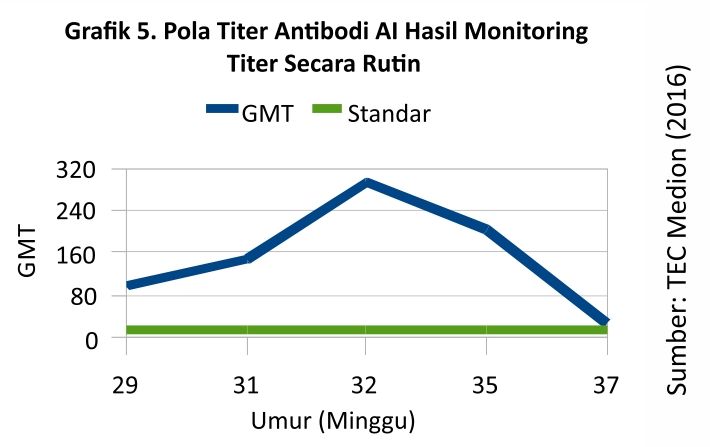
Monitoring antibody titer performed regularly will help farmers in monitoring the health status of poultry. In general, the implementation of serological tests aims to determine the age of the first vaccination, monitor the results of vaccination, help diagnose disease attacks, and make baseline titer (basic titer). Here we give one example of the results monitor AI antibody titer in chicken farm layer.
From Graph 5. it can be seen that the antibody titer from the 3 times AI vaccination program before the production period showed a decrease in antibody titer at 35 weeks of age and was close to non-protective at 37 weeks of age. So after the peak of production, it is necessary to re-vaccinate the AI so that the antibody titer returns to the protective level.
4. Supplementation
Administration of multivitamins and premixes as feed supplement (ration supplementation)will increase the endurance of poultry. Vitamin supplements, such as Vita Stress, Strong n Fit and Fortevit which contains vitamins A and C, will improve the condition of the mucous membrane of poultry so that the AI virus that will enter the mucous membrane of poultry through the air can be driven away optimally.
In addition to vitamins mixed in drinking water, other ways to increase the body's resistance can be done can add premixes in the ration such as Top Mix, Mix Plus, and Mineral Feed Suplement A to complete the nutritional needs of the ration so that the metabolic process of poultry body defense can run optimally. Add toxin (Freetox) on the ration to bind already formed mycotoxins so that they are not absorbed by the body and come out with feces. So it can suppress mycotoxins that are immunosuppressants.
Also give immunostimulants from natural ingredients such as Imustim 3 days before and 3 days after vaccination to improve the function of the immune system and body resistance during the rainy season. Imustim safe to use for long-term use and can be mixed with drugs or vitamins.
What if already Outbreak AI?
1. Vaccinate healthy chickens
To suppress the transmission of the disease, immediately revaccination (emergency vaccination), especially in the laying hen house whose condition is still healthy using Medivac AI. Revaccination results depend on the level of virulence of the virus that attacks, the number of illness and death lift.
2. Carcass handling
Remove dead birds in the cage immediately. Destroy with a burial method that must be located in a farm environment and at least 20 meters from the cage. The steps of the burial process are:
- Prepare a dug hole with a depth of at least 1.5 meters, according to the number of chickens to be buried.
- Sprinkle the grave bed using active lime. Workers wear masks, gloves and shoes boot.
- Insert the chicken carcass into the hole and then spray the disinfectant using Antisep or Neo Antisep.
- Chickens that are already seriously ill, but still alive, are slaughtered on the grave, the blood is collected in a container containing a disinfectant. Put the carcass and blood of the chicken in the grave, including the gloves and masks that the workers wore.
- Repeat by spraying disinfectant. Cover with dry straw and then set on fire.
- Cover the grave hole and sprinkle with active lime.
After handling the carcass, all workers must wash their hands and feet using soap, spray the body with disinfectant, and then be able to get out of the cage area. It will be better if the workers take a shower and wash their hair. For work clothes immediately soaked in a solution of detergent.
3. Prevention of transmission of contamination
After handling the carcass, the selection of sick chickens and the cage is empty, there are several things that must be done, namely:
- The cage is sprayed with disinfectants Formades or Sporades and insecticide, then left for 3 days in a row to kill the seeds of the disease.
- Collect and transport litter which is mixed with chicken feces and spray disinfectant on the surface of the sack before being removed from the cage.
- Remove the filled sack litter those that have been collected then bury with chicken carcasses.
4. Reduction of seedling population on site and equipment
To reduce the population of disease seeds in the cage area as well as equipment in it, what must be done is:
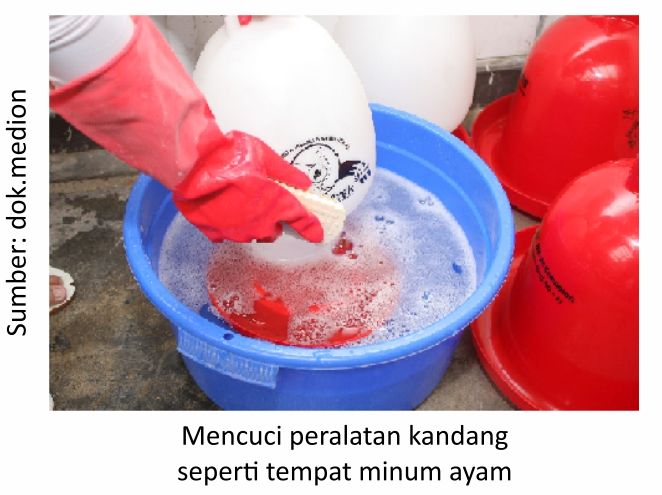
- Remove all cage equipment such as ration places and chicken drinking places. Wash with detergent then rinse with water and spray with disinfectant Medisep. This process is carried out simultaneously with the washing of the cage.
- Spray the entire inside of the cage thoroughly such as the floor, walls/curtains and the top of the cage with a detergent solution. If ration material or sticky feces are still found on the surface of the floor or walls of the cage, it is better to brush the walls and floor and then spray again.
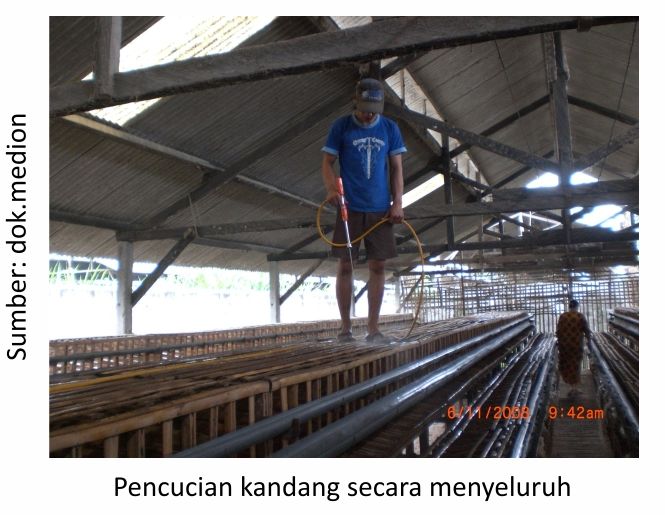
- Leave on for 3-6 hours and rinse with chlorinated water or a disinfectant such as Desinsep. Then rinse with water and let it dry.
- Spray an active lime solution on all interior parts of the poultry house, including the floor, pillars, and outer walls. Allow it to dry completely.
- Spray once again the entire cage using a disinfectant such as Formades or Sporades.
- Put the cleaned equipment back in the cage.
5. Cage break
The purpose of the cage break is to control/break the life cycle of disease seeds in the cage after washing and disinfection process. For seedlings that have long endurance in an environment such as the AI virus requires a longer cage rest period of 4 weeks or even more.
6. Start chick in return
Before chick in starting, you should disinfect the cage again first. Exactly 7 days before chick in, do Cage preparation such as stocking litter, install chick guard, heating and installing cage equipment (rations, drinkers, etc.). Sprinkle lime back on top litter as much as 0.5 kg / m2 for litter with a thickness of 5 cm. Next, 3-4 days before chick in, re-spray with Medisep.
By implementing the steps above, it is hoped that AI diseases can be prevented and controlled, so that AI cases, especially in 2017, can decrease. Greetings.