Knowledge of feed raw materials is necessary for a formulator or the one who made it (self mixing). In addition to the content of nutrients, it should be noted the content of antinutrients in the raw materials of the ration. This measure is necessary in order to minimize the adverse influence of the presence of antinutrients in such raw materials or rations.
Antinutrients are natural compounds in a feed that if used in excess will become toxic in the body. Antinutrients do not directly affect toxins, but will interfere with the function and utilization of food substances in the body, so that livestock experience nutrient deficiencies. Therefore, it is important to know the various antinutrients that are in the feedstuffs used.
Antinutrients in feed raw materials
Antinutrients have a detrimental effect on livestock. One feed raw material can have one or even more antinutrients. Various antinutrients in poultry feed raw materials can be seen in Table 1.
Chart 1. The content of antinutrients in poultry feed
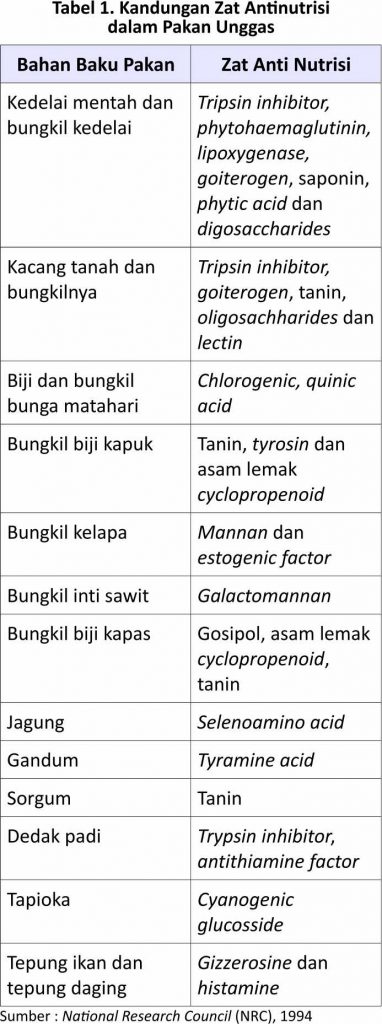
Sumber: National Research Council (NRC), 1994
Antinutrients that are most commonly found in poultry feed are divided into three groups, namely anticarbohydrate, antiprotein and antimineral.
- Anticarbohydrate
- Non – Starch Polysaccharida (NSP)
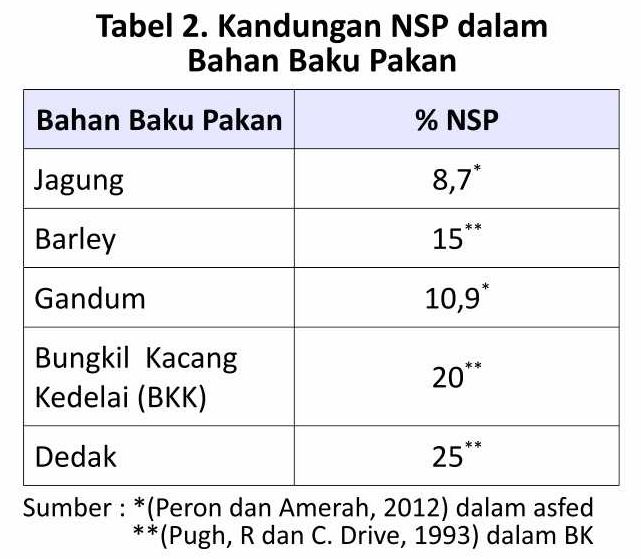
NSPS are complex carbohydrates found in the endosperm of the cell walls of cereal grains. This carbohydrate is difficult to digest so that it escapes from the digestive tract and binds water so that the viscosity of the liquid in the digestive tract becomes high. Increased viscosity will cause nutrient transport and absorption to decrease. In addition, NSP will affect the microflora in the gastrointestinal tract and lower energy metabolism. In general, NSP is divided into 3 categories, namely beta-glucan in barley, arabinoxylan in wheat, and oligosaccharides in soybean meal. The content of NSP in feed raw materials can be seen in Table 2.
Some researchers have reported that the addition of the enzyme xylanase into the feed can reduce the viscosity of digestion in the digestive tract (Silva and Smithard, 1997). The results of research Kiarie, Romero, and Ravindran (2014) reported the energy value of wheat-based feed supplemented xylanase has a metabolic energy of 3,057 kcal while the feed is not supplemented xylanase only obtain metabolic energy of 2,985 kcal. This increase is due to the enzyme xylanase that remodel NSP contained in wheat so as to increase energy metabolism in the digestive organs of broilers.
- Antiprotein
- Protease Inhibitor
Protease inhibitors are substances that inhibit the activity of protein breakdown of various specific enzymes. Protease inhibitors contained in soybeans can inhibit the enzyme trypsin, so known as trypsin inhibitors (Reseland, et al., 1996). If the trypsin enzyme is inhibited, it will affect protein digestion. This is due to the fact that trypsin is an activator of all enzymes secreted by the pancreas, it includes zymogens including trypsinogen, chymotrypsin, proelastase and procarboxypeptidase. Protease inhibitors in chickens cause enlargement (hypermetropy) of the pancreas due to missing many endogenous amino acids. In addition, it will also lead to low egg weight and decreased egg production. These Protease inhibitors can be removed by heating, extrusion or the use of infrared rays.
- Tannins
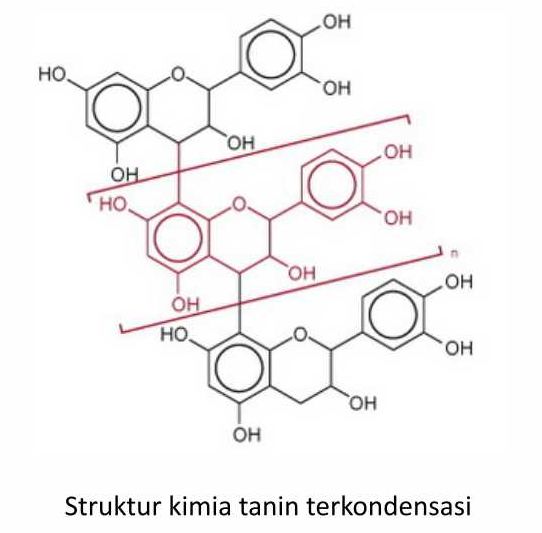
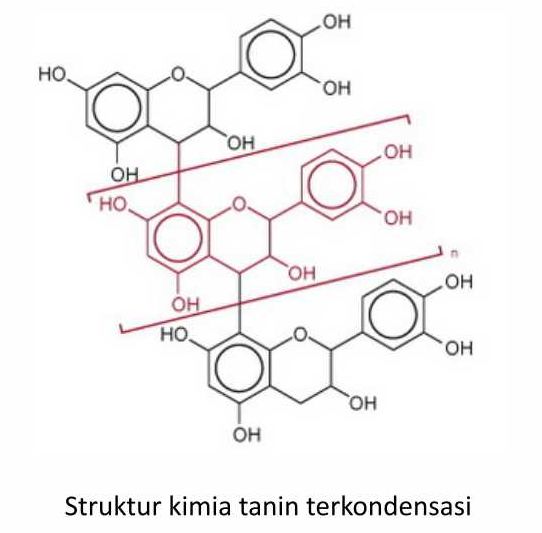
Tannins are water-soluble phenolic compounds with a molecular weight of 500-3000 g/mol can precipitate proteins from solution. Chemically, tannins are very complex and are usually divided into 2 types, namely hydrolysable tannin and condensed tannin. Some feed raw materials used in poultry feed contain a certain amount of condensed tannin such as sorghum seeds, millet, rapeseed and some seeds containing oil. Cottonseed cake contains 1.6% condensed tannin. Sedangkan barley dan bungkil kedelai mengandung 0,1% hydrolysable tannin. Among poultry feed ingredients, the highest tannin content is seen in sorghum seeds. The tannin content in sorghum varieties is the highest at 2.7-10.2% catechin equivalent. Sorghum, which contains tannins, when consumed, will cause a decrease in the speed of growth and reduce the efficiency of feed in broilers, reduce egg production in laying hens. How to overcome the influence of tannins in the feed by providing DL-methionine and supplementation of tannin binding agents namely gelatin and polyethyleneglycol which have the ability to bind and damage tannins. In addition, the tannin content in the feed can be derived by various treatments on feed raw materials such as soaking, boiling, fermentation and the outer shell of the seed.
- Antimineral
- Phytic Acid
Phytic acid is the mio-inositol salt of hexaphosphoric acid as a form of phosphorus storage in grains. Phytic acid is able to form complexes with various cations (phosphorus, calcium, iron, magnesium, copper, zinc) and protein (Piliang, 1997). Pallaup and Rimback (1996) added phytic acid will bind also with amino acids (proteins) and inhibit digestive enzymes. This will lead to a decrease in the digestibility of nutrients in the digestive tract. Chart 4. indicates the content of phytic acid in feed raw materials.
Chart 4. Phytic acid content in feed raw materials
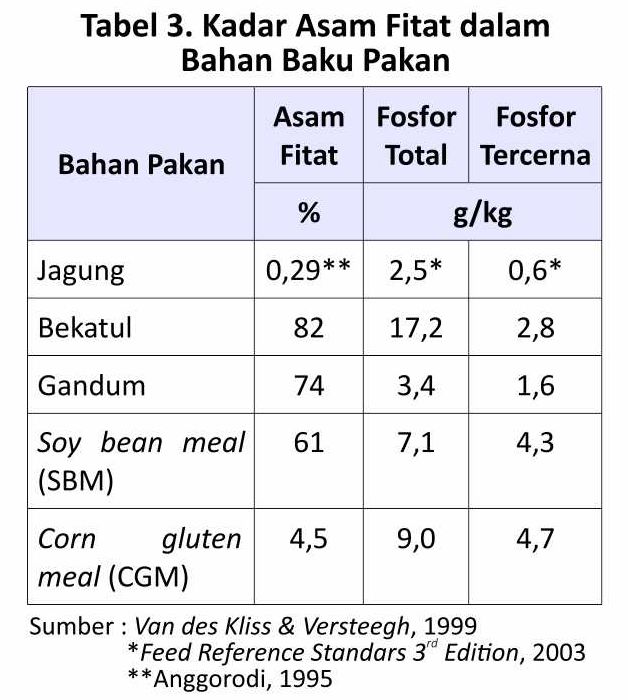
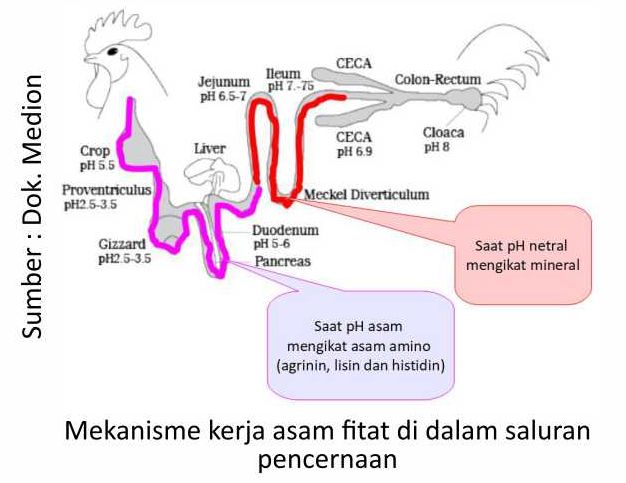
Asam fitat dalam saluran pencernaan mempunyai efek negatif berkaitan dengan penyerapan nutrisi. Asam fitat ini dalam suasana asam (pH <4) akan mengikat asam amino seperti agrinin, lisin, dan histidin. Sedangkan dalam suasana netral, asam fitat akan mengikat mineral. Adanya nutrien yang terikat oleh asam fitat ini akan menyebabkan nutrisi tidak dapat diserap oleh saluran pencernaan. Keberadaan asam fitat mengakibatkan kecernaan fosfor menjadi rendah yaitu sekitar 10%.Adanya asam fitat dalam ransum ayam pedaging juga mengakibatkan terjadinya penurunan metabolisme energi karena secara tidak langsung asam fitat meningkatkan sekresi natrium (Na) yang menghambat proses penyerapan glukosa pada saluran pencernaan. Selain itu, adanya fitat akan menyebabkan ketersediaan dan kecernaan fosfor menurun, akibatnya kualitas kerabang dan kerangka tubuh ayam akan berkurang. Kasus yang sering ditemukan adalah warna kerabang menjadi lebih pucat dan tipis serta ditemukannya beberapa ayam yang mengalami kelumpuhan.
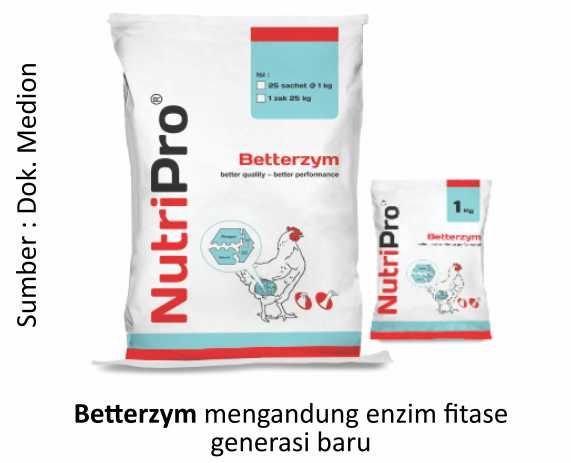
Betterzym is a mixed feed powder preparation containing the latest generation phytase enzyme (6-phytate) which effectively improves the digestibility of nutrients, especially phosphorus (P). Betterzym will break the bonds of phytic acid so as to increase the availability and digestibility of such amino acids, carbohydrates and minerals, especially phosphorus.
After knowing the various antinutrients in feed raw materials, it would be nice if in making feed formulations not only pay attention to the main nutrient content, but also the antinutrients contained in it. Limit the use of Feed containing antinutrients or perform treatment to eliminate or reduce levels of antinutrients in feed raw materials before use. Thus, at a glance, information related to antinutrients in feed raw materials. Hopefully it can add insight to all of us. Happy duty and success always.